
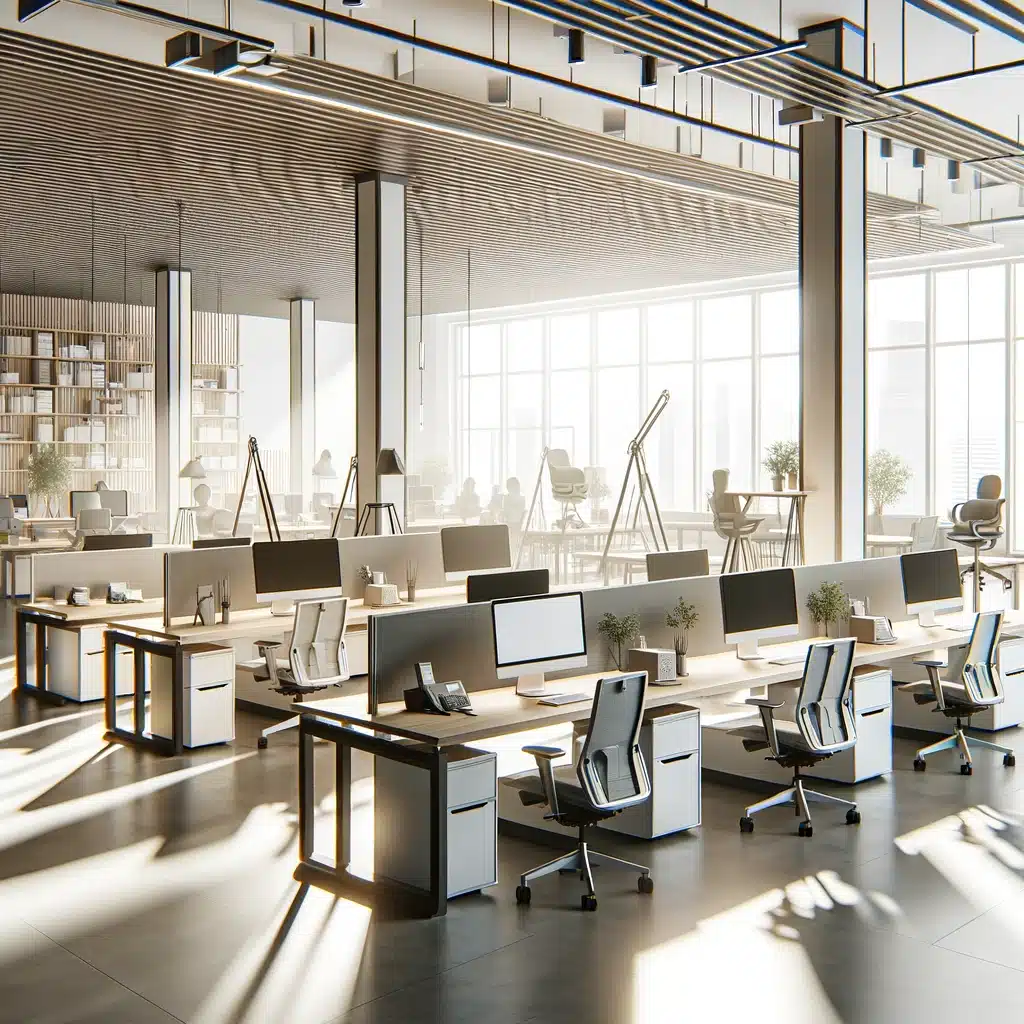
Let's delve deeper into the trend of Flexibility and Modularity in office furniture. This trend reflects a shift in the way workplaces are designed, with adaptability and multifunctionality at the core. Here are some detailed aspects:
- Adaptable Workstations : Modern workplaces require flexibility to accommodate individual work styles and the need for collaboration. Adjustable workstations, such as height-adjustable desks, give employees the opportunity to tailor their work environment to their personal preferences, which can lead to increased productivity and satisfaction.
- Modular Furniture Systems : These systems are designed to be easily reconfigured or expanded depending on the needs of the moment. This includes modular lounge elements that can be put together for informal meetings or taken apart for individual work, as well as movable partitions that can quickly transform spaces from open to private work areas.
- Collaboration-Friendly Spaces : As the emphasis on teamwork and collaboration increases, office furniture is evolving to support these changes. Furniture that makes it easy to gather, such as round tables and soft seating groups with built-in power and data ports, encourages spontaneous meetings and brainstorming sessions.
- Sustainability in Flexibility : In addition to the practical aspects of flexibility and modularity, there is also an increasing demand for sustainable solutions. Furniture that lasts a long time and can be customized without replacement is not only cost-efficient, but also better for the environment. This may mean choosing furniture made from high-quality, durable materials that are easy to maintain and repair.
This trend towards flexibility and modularity in office furniture is a response to the dynamic and sometimes unpredictable nature of modern work. It enables organizations to efficiently use and reconfigure their spaces based on changing needs, which is essential in a rapidly changing work environment.

