

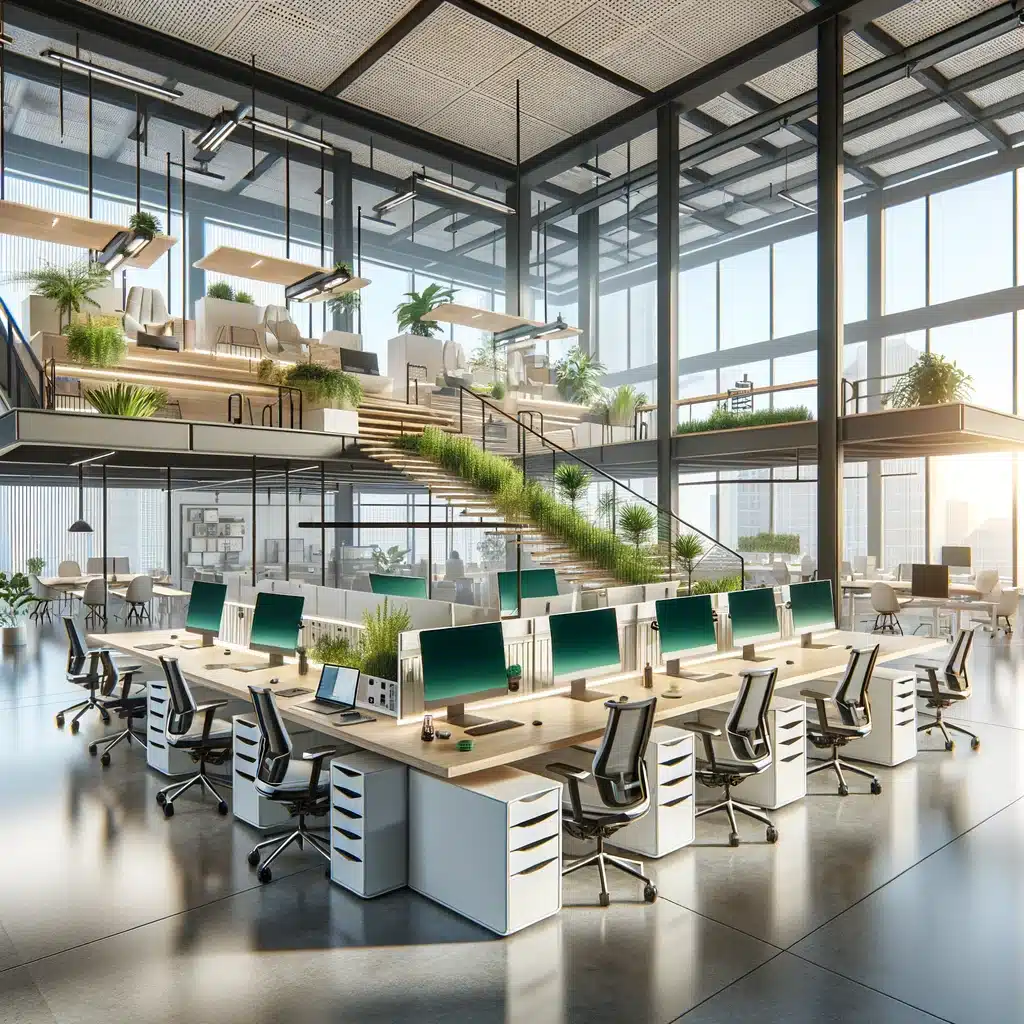
The modern workplace is constantly evolving and requires flexibility, ergonomics, sustainability and technological integration. Here are some key aspects to consider when creating a contemporary workspace:
- Flexibility and Modularity:
- Workplaces need to be able to change quickly to support different working styles and processes. Modular furniture pieces offer the opportunity to adapt the layout of the workspace to the needs of the users.
- The use of modular furniture makes it easy to adjust or move workstations, creating a dynamic and adaptable environment that promotes productivity.
- Ergonomics and Health:
- Furniture should be designed with physical well-being in mind, with features such as adjustable standing desks and ergonomic chairs that improve posture and reduce the likelihood of complaints.
- Accessories such as monitor arms and ergonomic keyboards can also contribute to a healthy working posture and comfort during extended use.
- Sustainability and Environmental Awareness:
- The use of environmentally friendly materials and production processes contributes to a sustainable workplace. Furniture should be made with materials that are recyclable and have a long lifespan.
- Promoting a circular economy through furniture reuse and recycling helps reduce waste and conserve natural resources.
- Technology and Connectivity:
- Modern workplaces require integrated technology features such as charging stations, integrated displays and wireless connectivity to improve efficiency.
- Furniture should support virtual meetings and remote collaboration, with integrated technologies that enable seamless communication and collaboration regardless of users' location.
By integrating these aspects into workspace design, organizations can create a stimulating and productive environment that promotes employee health, well-being and performance, while taking sustainability and technology needs into account.

